Emergency exits: how to balance safety and security
Emergency exits: how to balance safety and security By Caraballo Locksmith – With Caraballo, there’s no failure If
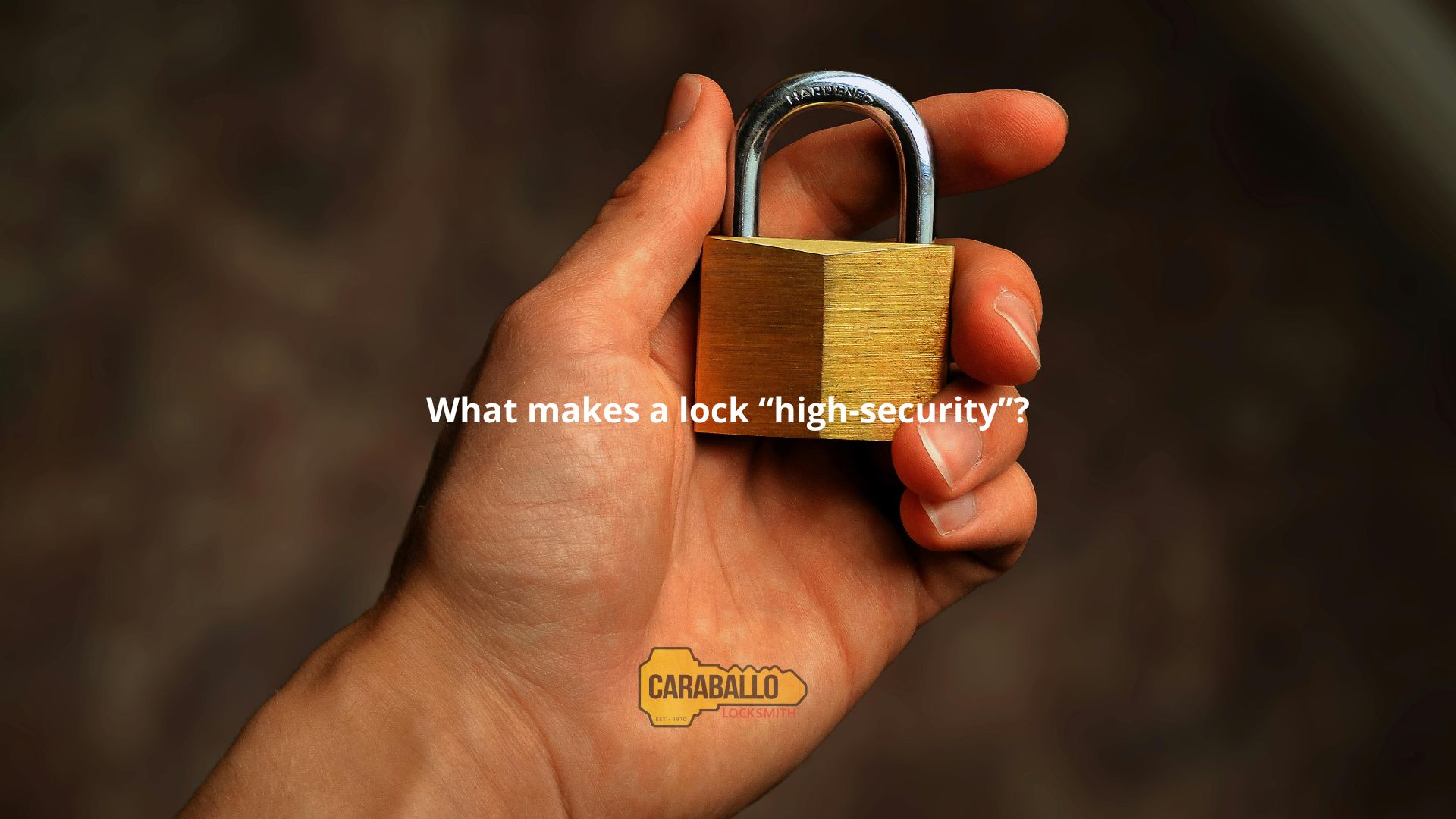
Walk into any hardware store in Miami and you’ll see boxes labeled “heavy-duty,” “premium,” or even “high-security.” However, not every lock that looks strong actually provides high-security protection.
So what truly makes a lock “high-security”?
The answer goes far beyond appearance. A genuine high-security lock combines advanced engineering, strict key control, reinforced materials, and resistance against modern attack techniques. At Caraballo Locksmith, located at 1270 SW 8 St, Miami, FL 33135, we’ve spent over 55 years helping homeowners and businesses understand the difference between marketing claims and real protection.
Let’s break down what separates true high-security locks from standard hardware.
Traditional locks use basic pin-and-tumbler mechanisms. While functional, they can be vulnerable to picking when handled by experienced intruders.
Because these mechanisms require precise positioning, picking becomes dramatically more difficult and time-consuming.
And here’s the key point: burglars prefer speed. If a lock slows them down significantly, they often move on.
Lock bumping remains one of the most common forced-entry techniques. A bump key can manipulate standard pins quickly, allowing entry in seconds.
As a result, bump keys that work on ordinary locks fail against true high-security cylinders.
In commercial environments across Miami-Dade, forced-entry attempts often involve power tools. Standard locks may fall quickly to drilling.
High-security locks include hardened steel inserts and anti-drill plates strategically placed inside the cylinder. These reinforcements protect critical components from destruction.
Therefore, even if someone attempts to drill the lock, the hardened materials slow or prevent penetration.
This is one of the most overlooked features—and one of the most important.
Standard keys can be duplicated at hardware stores without authorization. That creates serious vulnerability, especially in commercial settings.
High-security locks use restricted keyways.
For businesses, this feature reduces internal theft risks. For homeowners, it prevents unauthorized duplicates from circulating unnoticed.
Without key control, even the strongest lock loses its advantage.
Many high-security systems rely on patented key technology. These keys often include:
Because the design is patented, duplication remains legally protected for a specific period. Only authorized dealers can create copies.
This layer of protection adds legal security on top of mechanical strength.
Appearance can be misleading. Some locks look solid but contain lightweight internal components.
In addition, premium deadbolts extend deeper into reinforced strike plates. When paired with a strengthened door frame, they significantly increase resistance against kick-ins.
In Miami’s humid and coastal climate, material quality also matters. Salt air and moisture accelerate corrosion. High-quality metals withstand these environmental factors better than basic hardware.
True high-security locks often carry recognized ratings from testing organizations.
ANSI (American National Standards Institute) grades locks from Grade 3 (basic residential) to Grade 1 (highest commercial rating).
A Grade 1 deadbolt withstands:
Before upgrading, property owners should verify hardware ratings rather than relying on packaging claims.
Modern high-security doesn’t always mean mechanical-only. Many advanced systems combine mechanical strength with electronic access control.
However, electronic systems must still include mechanical fail-safes and code compliance features.
When installed properly, hybrid systems offer both convenience and elevated protection.
Even the best lock can fail if installed incorrectly.
Misaligned strike plates, weak door frames, or short mounting screws undermine security instantly. Therefore, professional installation plays a critical role.
Because security is a system—not just a single component.
If you’ve experienced lost keys, unauthorized duplication, or internal access concerns, high-security solutions can restore control.
No lock is invincible. However, high-security locks dramatically increase resistance and time required for forced entry.
Many Miami homeowners benefit from high-security upgrades, especially in high-value neighborhoods.
While the upfront cost is higher, the long-term protection often prevents far greater financial losses.
Price alone does not define quality. Engineering, materials, and key control define true high-security performance.
For over 55 years, Caraballo Locksmith has helped Miami-Dade homeowners and businesses upgrade their protection intelligently.
We don’t push unnecessary upgrades. Instead, we evaluate your risk level and recommend solutions that match your environment, traffic level, and budget.
Whether you need restricted key systems, Grade 1 commercial hardware, or integrated access control, our experience ensures proper installation and long-term reliability.
📍 1270 SW 8 St, Miami, FL 33135
📞 786-970-0149
A lock becomes “high-security” when it combines advanced internal mechanisms, drill resistance, restricted key control, durable construction, and professional installation.
Marketing labels don’t guarantee protection. Engineering does.
If you’re unsure whether your current locks truly qualify as high-security—or if you’re ready to upgrade—Caraballo Locksmith can guide you with honest expertise and five decades of experience serving Miami.
Real security starts with informed decisions.