Locks Every Miami Homeowner Should Avoid
Locks Every Miami Homeowner Should Avoid By Caraballo Locksmith – With Caraballo, there’s no failure Not All Locks
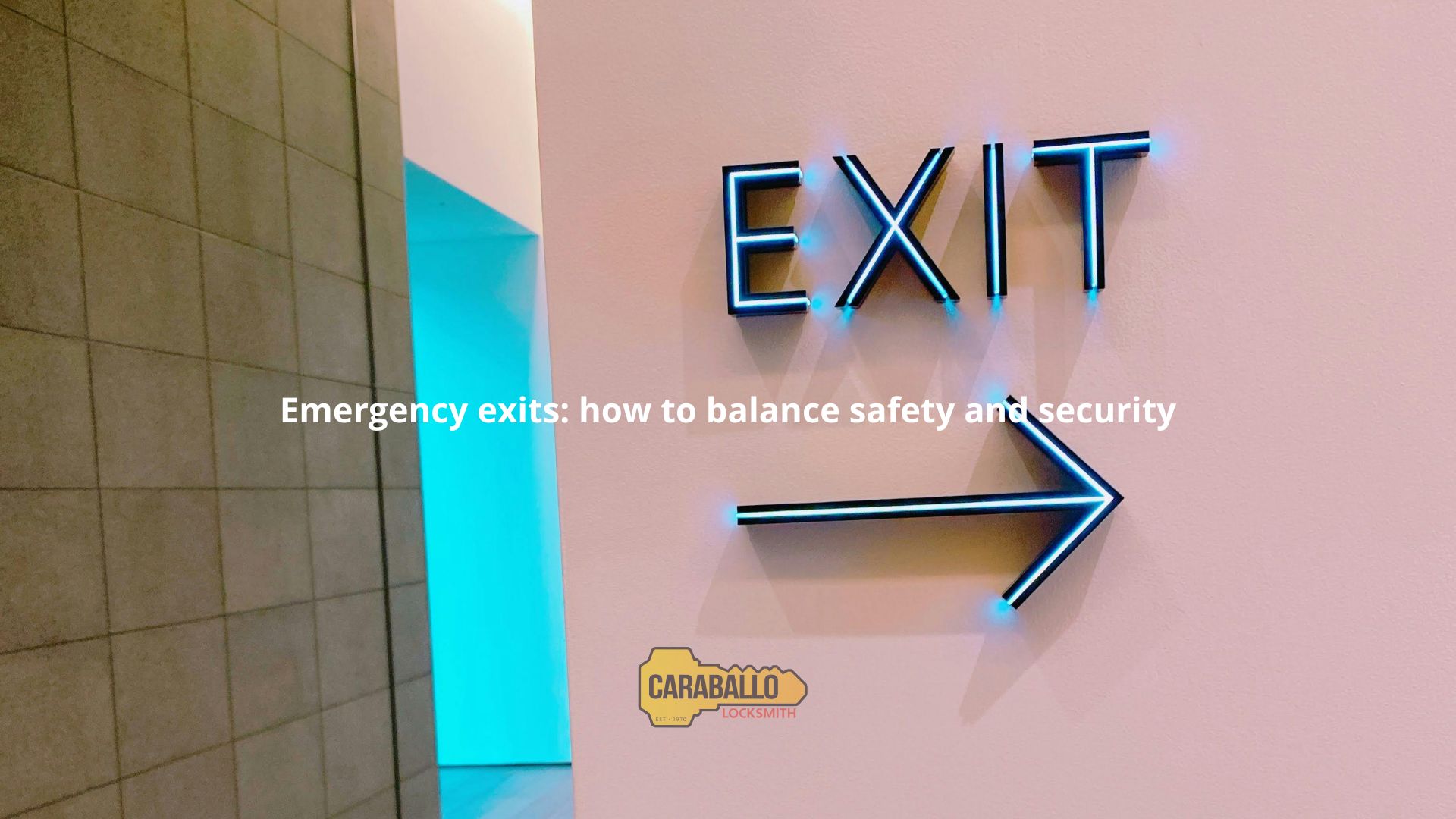
If you own or manage a commercial property in Miami-Dade, you face a constant challenge: keeping your building secure from intruders while ensuring occupants can exit instantly during an emergency.
At first glance, those two goals seem to conflict. After all, the stronger you make a door against outside entry, the harder it may become to exit quickly. However, with the right hardware and professional installation, you can achieve both safety and security without compromise.
At Caraballo Locksmith, located at 1270 SW 8 St, Miami, FL 33135, we have spent over 55 years helping businesses design exit systems that meet fire code requirements while protecting against theft and unauthorized access. Because Miami businesses operate in high-traffic, high-liability environments, balancing these priorities is essential.
Let’s break down how to do it correctly.
Emergency exits are not just “extra doors.” Instead, they are life-safety systems. Fire inspectors, building officials, and insurance carriers evaluate them carefully.
In an emergency, people panic. Therefore, exit doors must open immediately with minimal effort. No keys. No complicated steps. No delays.
As a result, business owners often over-secure exit doors—sometimes without realizing they are violating fire code.
Many property owners install double-cylinder deadbolts to prevent break-ins. While that may seem like a smart move, it creates serious safety hazards.
Double-cylinder locks require a key on both sides. During a fire or emergency, someone may not have immediate access to that key. That delay can cost lives.
Fire codes in Miami-Dade require most commercial exit doors to allow single-motion egress. In other words, occupants must push and exit instantly without searching for a key.
Instead of double-cylinder locks, consider panic hardware or code-compliant exit devices that provide internal safety while resisting forced entry from outside.
Panic bars, also called crash bars, are designed for exactly this balance. When someone pushes the bar, the door opens immediately. However, from the outside, the door remains secured.
However, not all panic hardware is installed correctly. Improper alignment, weak strike plates, or poor-quality hardware can reduce both safety and security.
Professional installation ensures:
Back doors are often the weakest point in commercial security. While front entrances receive attention, rear exits sometimes get overlooked.
However, inspectors check them just as closely.
Here’s how to secure them properly:
Residential hardware will not withstand heavy traffic or forced entry. Commercial-rated panic hardware provides durability and code compliance.
Security isn’t only about the lock. Reinforced strike plates and properly anchored frames increase resistance against kick-ins.
Exit alarms allow free egress but sound an alert if someone opens the door improperly. This solution discourages theft without blocking emergency escape.
Electronic systems can secure outside entry while automatically releasing during fire alarms.
When installed properly, these upgrades strengthen security without violating life-safety rules.
Many Miami businesses use magnetic locks or electronic access control systems. While these systems offer convenience, they must meet strict requirements.
If these elements fail, inspectors will cite violations immediately.
Therefore, electronic security must integrate with life-safety systems seamlessly.
Even the best panic hardware fails if the door doesn’t close properly.
As a result, doors may not latch fully. This weakens fire containment and compromises security.
Routine maintenance prevents these problems. In fact, many inspection failures occur simply because doors fail to self-close and latch correctly.
A small adjustment today prevents a major violation tomorrow.
Many business owners don’t realize that improper exit hardware can affect insurance coverage.
If a burglary occurs and investigators discover non-compliant hardware—or modifications that void fire ratings—insurance companies may reduce or deny claims.
Furthermore, liability increases if someone cannot exit safely during an emergency.
Balancing safety and security protects not only your building but also your financial stability.
Not always. Over-securing an exit can create dangerous violations.
Inspectors evaluate every designated exit door.
Only if installed and configured correctly.
Commercial properties require commercial-grade hardware.
Understanding these realities helps business owners make smarter decisions.
Instead of reacting to violations, smart business owners take a proactive approach.
Because Miami’s climate accelerates wear and corrosion, preventive maintenance is especially important.
Humidity, salt air, and high traffic can weaken door hardware faster than many expect.
Balancing emergency safety and building security requires technical knowledge of:
At Caraballo Locksmith, we have served Miami businesses for over five decades. Our team understands the unique challenges of operating in high-traffic urban environments.
We don’t just install locks—we design compliant, durable, and secure exit solutions tailored to your property.
You should contact a commercial locksmith if:
Waiting until an inspection fails creates unnecessary stress and expense.
Emergency exits are not optional upgrades—they are life-saving systems. At the same time, security remains essential for Miami businesses facing theft and unauthorized access.
Fortunately, you don’t have to choose between safety and protection.
With properly installed panic hardware, reinforced frames, compliant electronic systems, and routine maintenance, you can achieve both.
If you want peace of mind before your next inspection—or if you simply want to strengthen your building’s protection—Caraballo Locksmith is ready to help.
📍 1270 SW 8 St, Miami, FL 33135
📞 786-970-0149
After 55 years in Miami-Dade, we know how to balance safety and security the right way.